Sustainability in Practice: How DELTA Is Shaping the Future in Austria, Slovakia, the Czech Republic and Ukraine
01. July 2026
Sustainability is not achieved through isolated measures. It is created through the intelligent combination of architecture, adaptive reuse, digitalization, energy efficiency and a long-term perspective on buildings and their use. As an internationally operating company, DELTA delivers projects across Austria, Slovakia, the Czech Republic and Ukraine with the ambition of combining environmental, economic and social sustainability into a holistic approach.
Austria: Sustainability Throughout the Building Lifecycle
In Austria, many projects focus on lifecycle-oriented planning, the revitalization of existing infrastructure and integrated project delivery.
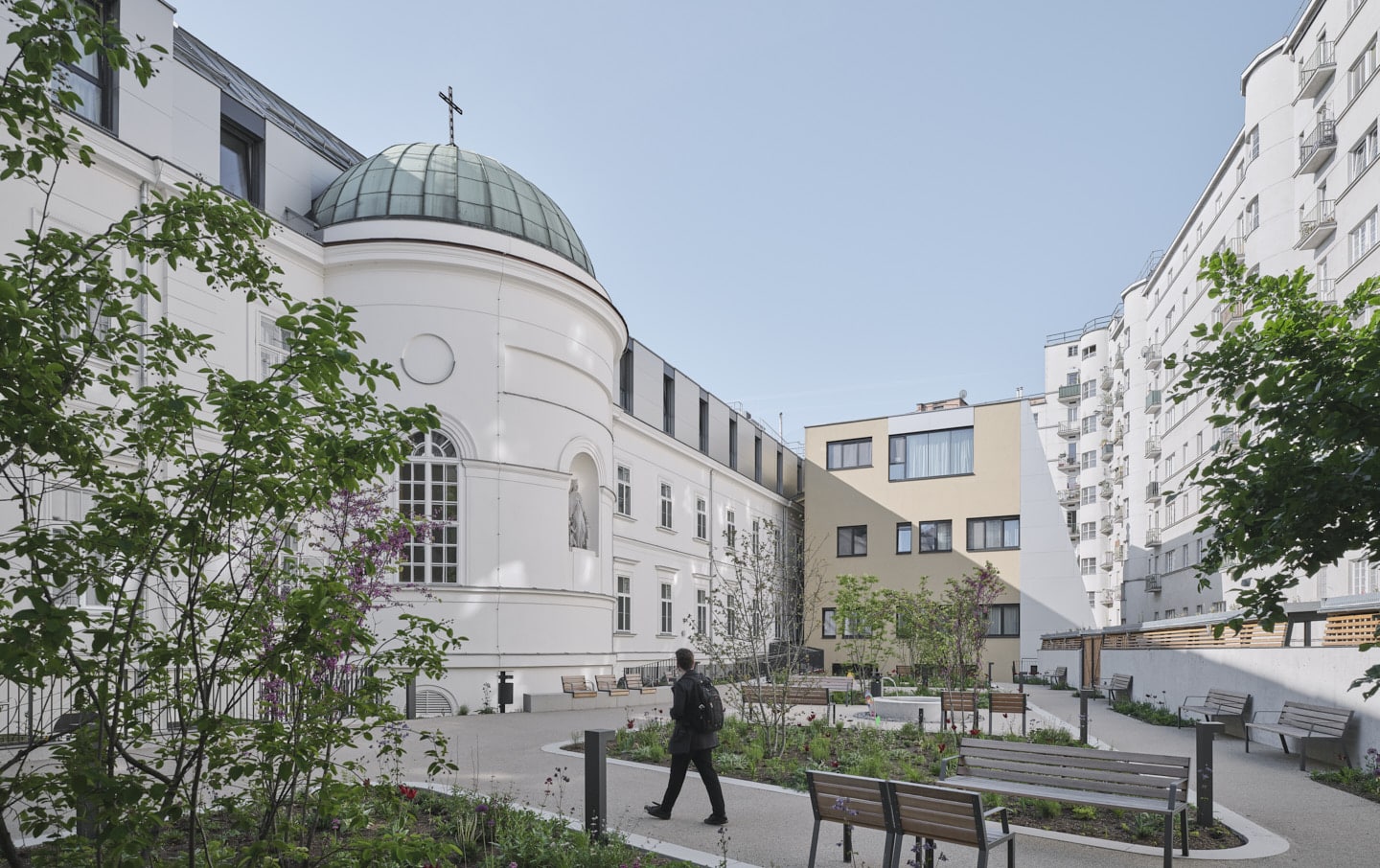
Photo: Elisabethinen Vienna-Center, © David Schreyer
A prime example is the redevelopment of Elisabethines Vienna Center, where the careful transformation of existing building structures preserved valuable embodied carbon while creating state-of-the-art healthcare infrastructure. The project demonstrates how sustainable urban development can successfully be realized in the healthcare sector—even while hospital operations continue uninterrupted.
The Campus Health-Education of “Barmherzige Schwestern Ried” represents another forward-looking development. Bringing healthcare and education together on one integrated campus creates operational synergies, reduces infrastructure requirements and provides flexible buildings that can adapt to future needs.
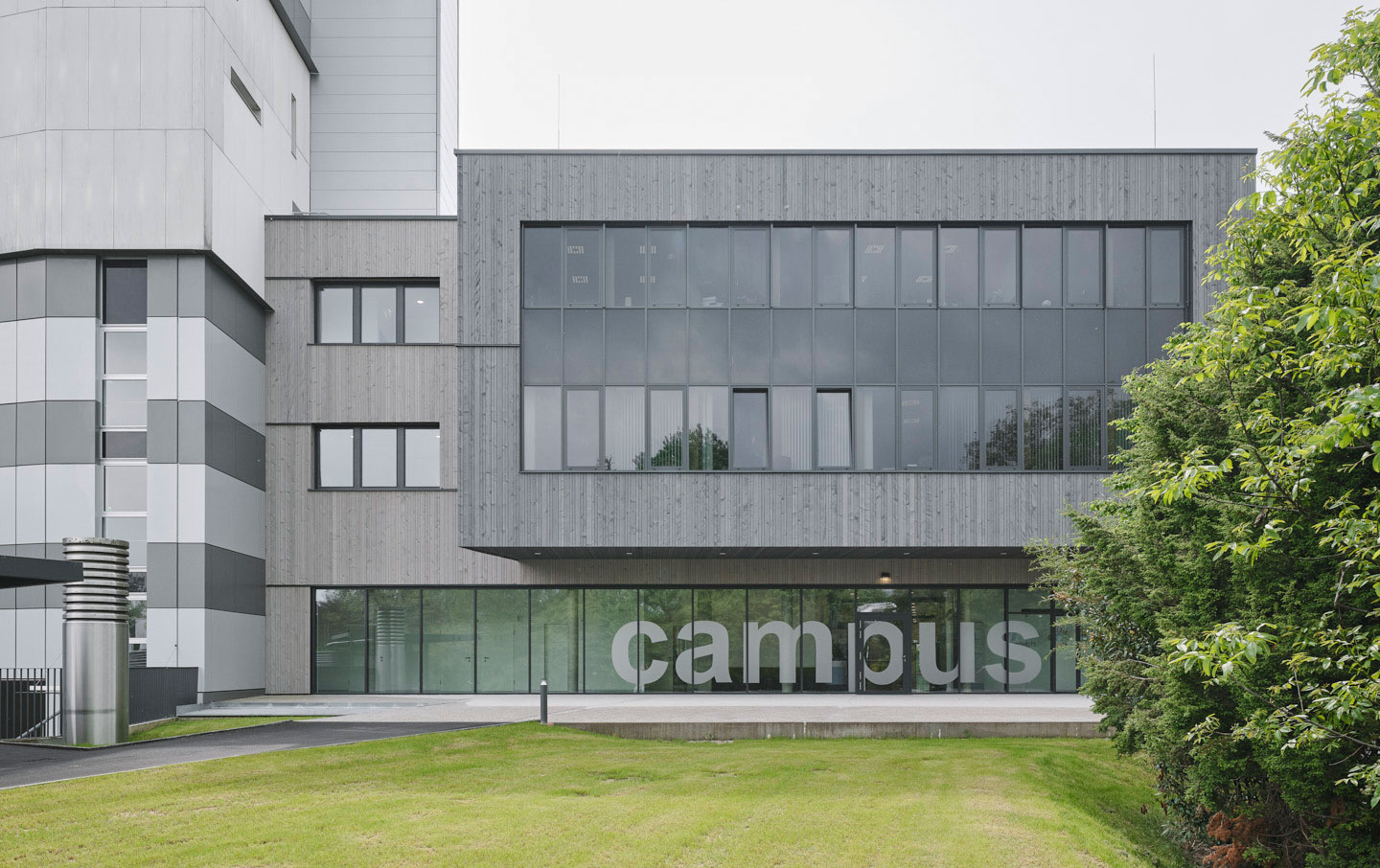
Photo: Campus Health-Education BHS Ried, © David Schreyer
The Tabakfabrik Linz has become an internationally recognized example of sustainable transformation. A former industrial complex has evolved into a vibrant innovation and creative district through the adaptive reuse of existing buildings. Preserving the original structures significantly reduced the need for new construction materials while creating lasting economic, social and cultural value – making it an outstanding example of successful brownfield redevelopment.
At the Vienna University of Economics and Business (WU Vienna) Campus, one of Austria’s largest university developments, sustainable campus planning, international green building standards and lifecycle thinking formed the foundation of the project. Together with its consortium partner, DELTA was responsible for project management as well as supporting the ÖGNI/DGNB certification process.

Photo: Tabakfabrik Linz, © Florian Voggeneder
Slovakia: Sustainable Workplaces Through Adaptive Reuse
Numerous projects in Slovakia demonstrate how sustainable interior architecture and the intelligent reuse of existing buildings contribute significantly to resource conservation.
For TAKEDA Pharmaceutical Slovakia, DELTA created a contemporary workplace within the historic Pradiareň 1900 building in Bratislava. Reusing this protected heritage building instead of constructing a new office preserved cultural heritage while reducing resource consumption. The project received the BREEAM Office – Excellent 2024 certification.
A further project in the financial services sector involved transforming a historic building in central Vienna into a workplace tailored to hybrid working models. By reusing existing materials, maximising natural daylight and implementing flexible office concepts, the project created a long-lasting, resource-efficient working environment.
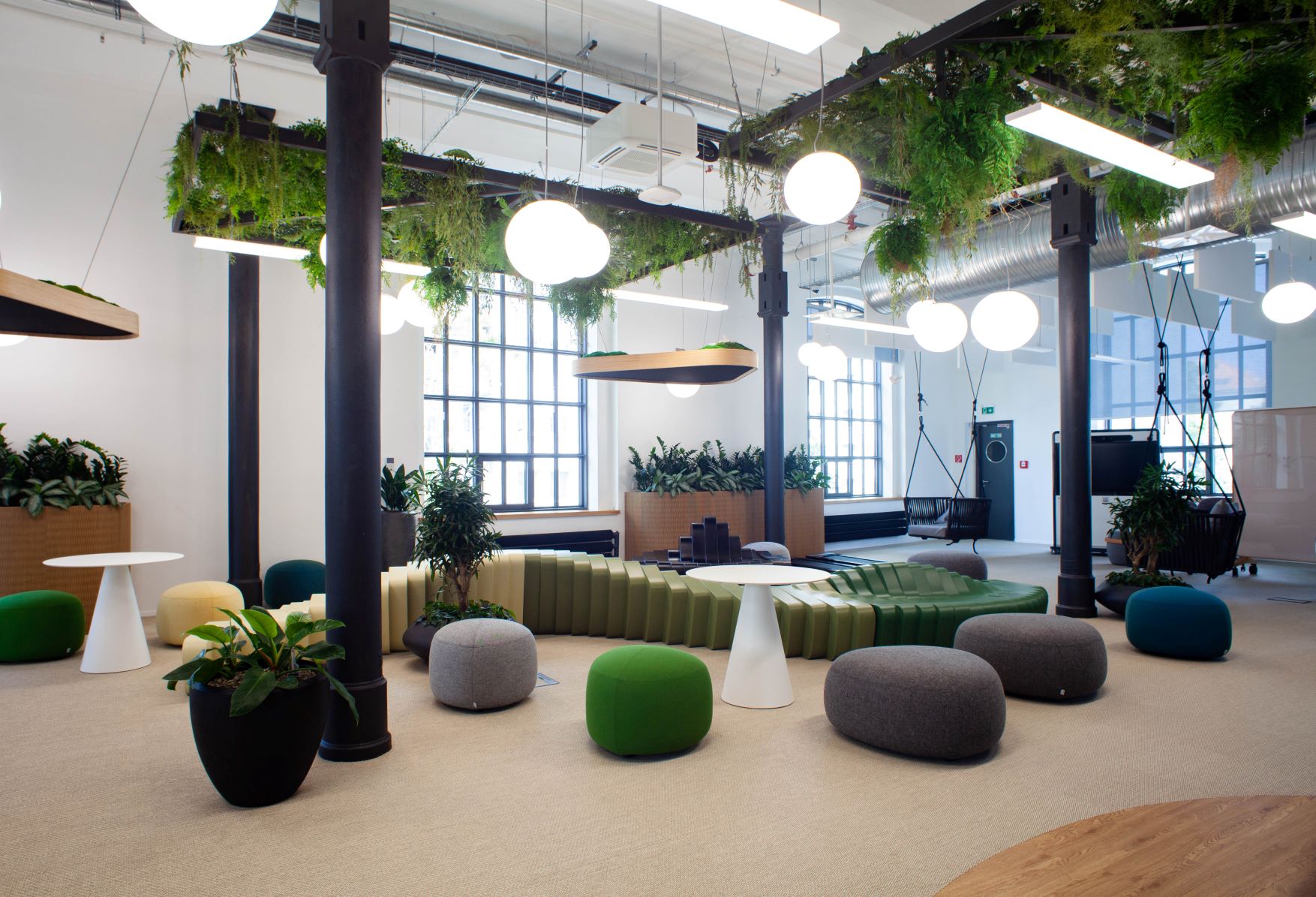
Photo: TAKEDA Pharmaceutical Slovakia, © Adam Cifra
The Mondelez European Business Services Centre and DELTA Office Bratislava further illustrate how revitalisation, flexible layouts, natural materials, indoor greenery and recycled materials contribute to healthier workplaces and extend the useful life of office environments.
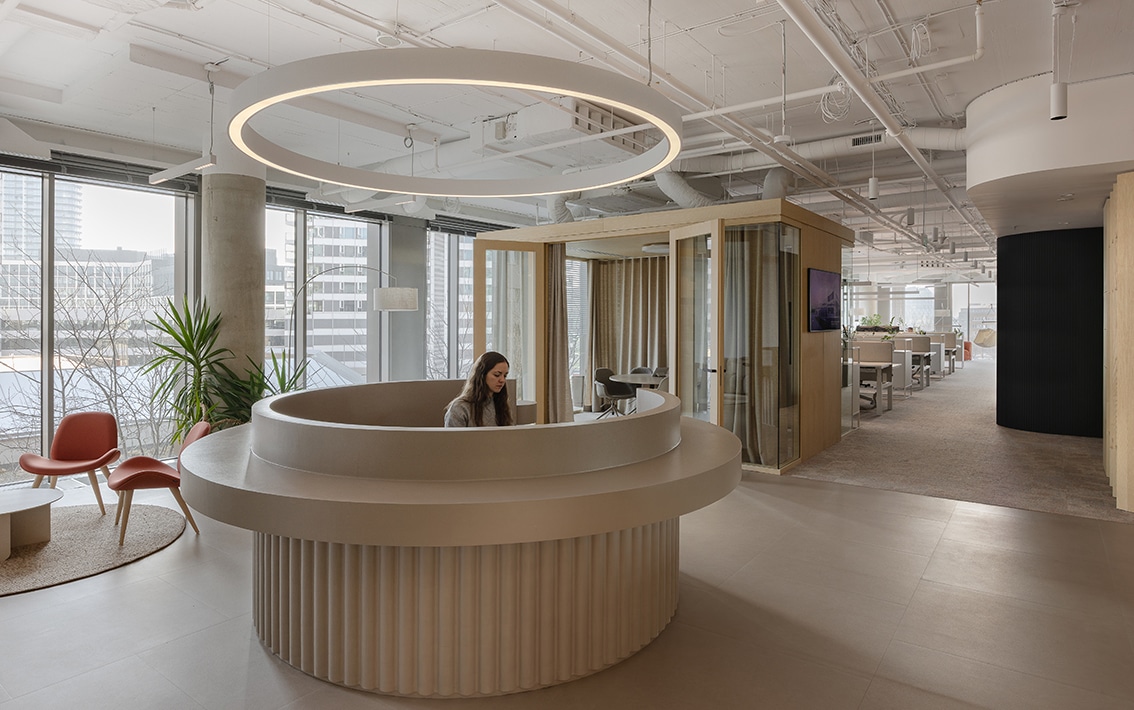
Photo: DELTA Office Bratislava, © Lenka Nemethova
Czech Republic: Efficiency, Digitalisation and Sustainable Development
In the Czech Republic, sustainable development is particularly reflected in industrial, manufacturing and logistics projects, where energy-efficient buildings, digital planning processes and long-term operational performance are key priorities.
DELTA teams support numerous international industrial and technology developments in which sustainable infrastructure, optimized operational processes and resource-efficient building concepts form an integral part of the project strategy.
Early integration of digital tools such as Building Information Modelling (BIM), optimization of energy performance and lifecycle-oriented planning are fundamental principles applied from the earliest project stages.
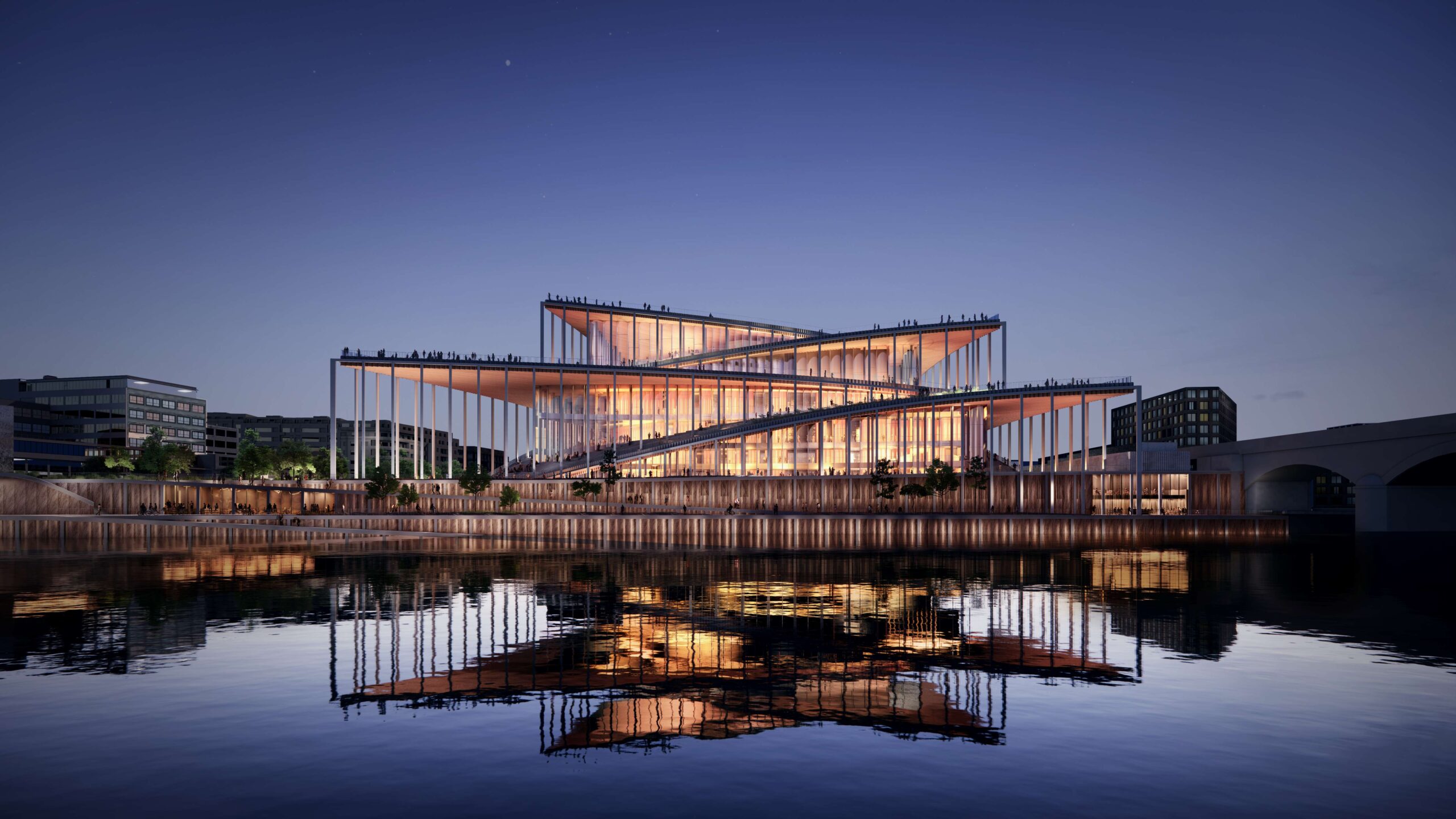
Photo: Vltava Philharmonic Hall in Prague, © BIG Bjarke Ingels Group
These principles – comprehensive project preparation and lifecycle thinking – extend well beyond industrial developments. An outstanding example is the Vltava Philharmonic Hall in Prague, an exceptional cultural project combining the iconic architectural vision of the internationally renowned Danish studio BIG with DELTA’s expertise in project management. DELTA oversees the preparation and coordination of the entire project, ensuring that sustainability and lifecycle performance are embedded throughout every phase of development.
DELTA’s project management team also supported the delivery of the Hagibor Office buildings in Prague, both of which achieved the highest level of LEED Platinum certification.
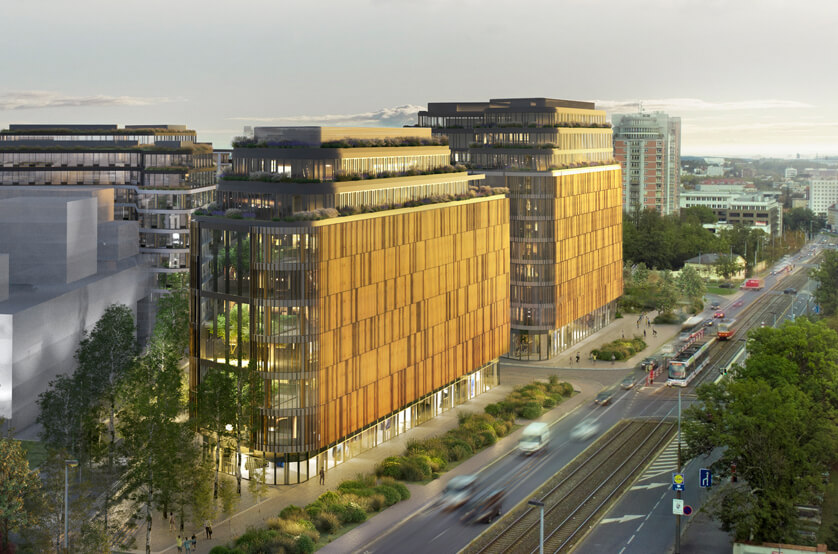
Photo: Hagibor Office Prag, © CRESTYL
Ukraine: Sustainability Through Transformation and Resilience
Ukraine demonstrates that sustainability extends far beyond energy efficiency. Here, sustainable construction is closely linked to resilience, urban regeneration and social transformation.
A flagship example is Promprylad.Renovation in Ivano-Frankivsk. A former industrial complex has been transformed into a vibrant multifunctional hub for business, education, culture and community activities. Reusing the existing structures significantly reduced the demand for new construction materials. The project also includes thermal modernization of the façades, recycling of construction waste, sustainable landscape design and dedicated infrastructure for waste separation and recycling. It has been certified under LEED v4 BD+C: Core and Shell.
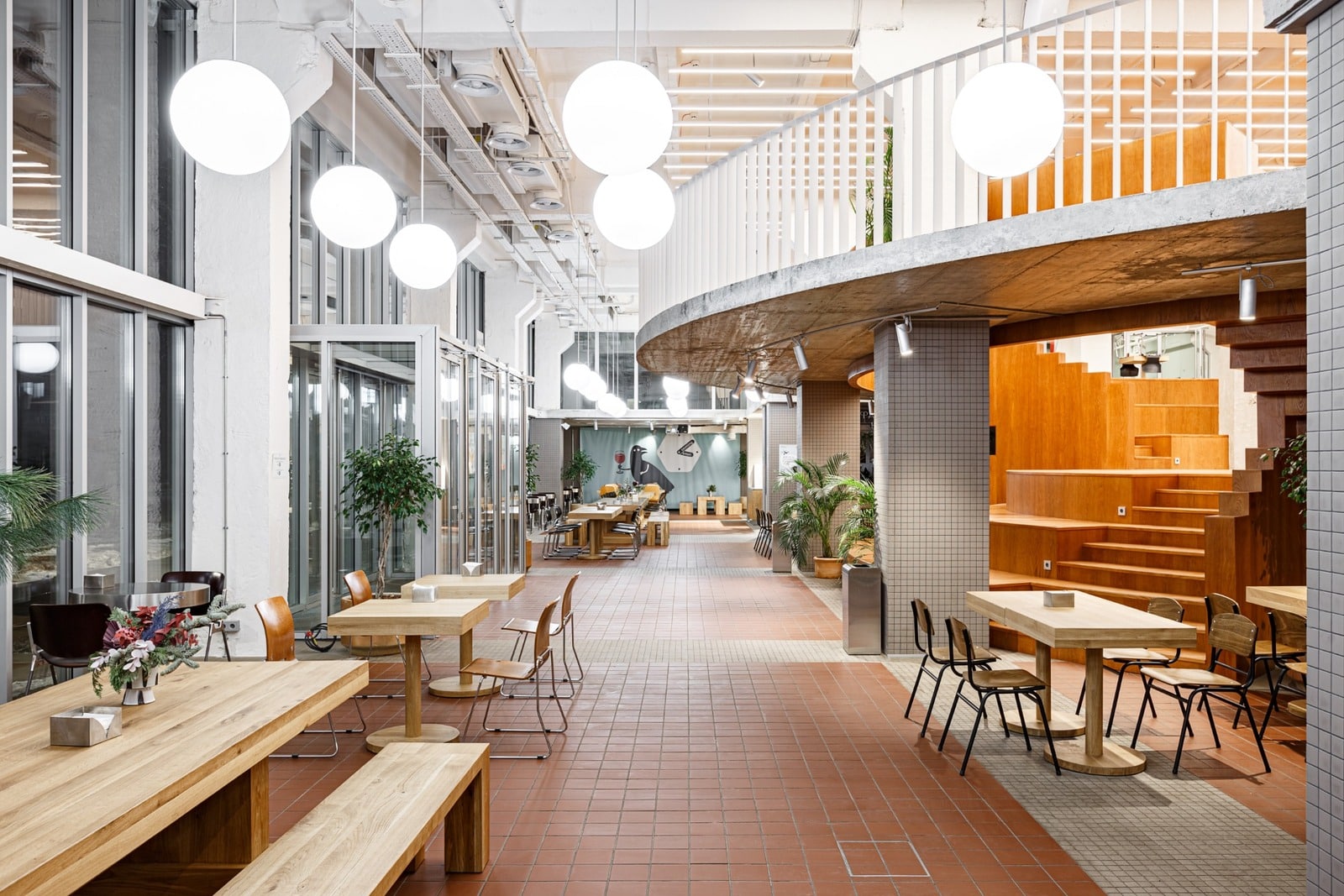
Photo: Promprylad
Another outstanding example is UNIT.City in Kyiv, representing a new generation of sustainable innovation districts. Buildings throughout the campus are developed according to internationally recognized LEED standards, focusing on energy efficiency, responsible resource management, high indoor environmental quality and sustainable mobility. DELTA has supported green building certification processes within the innovation park for many years.
The UNIT.B06 building achieved LEED Silver certification, confirming compliance with internationally recognized sustainability standards. Key features include energy-efficient building systems, reduced water consumption, enhanced indoor environmental quality and sustainable site development.
Sustainability Means Future Readiness
Whether developing healthcare infrastructure in Austria, creating innovative workplaces in Slovakia, delivering sustainable industrial and cultural projects in the Czech Republic or driving urban transformation in Ukraine, DELTA’s projects demonstrate that sustainability has many dimensions.
What unites all these projects is a holistic approach: making intelligent use of existing resources, reducing emissions and material consumption, creating healthy places to live and work, and considering the entire lifecycle of buildings from the very beginning.
Guided by the DELTA Green Mission, we create architecture, infrastructure and places that are designed not only for today’s needs but also for the generations to come.